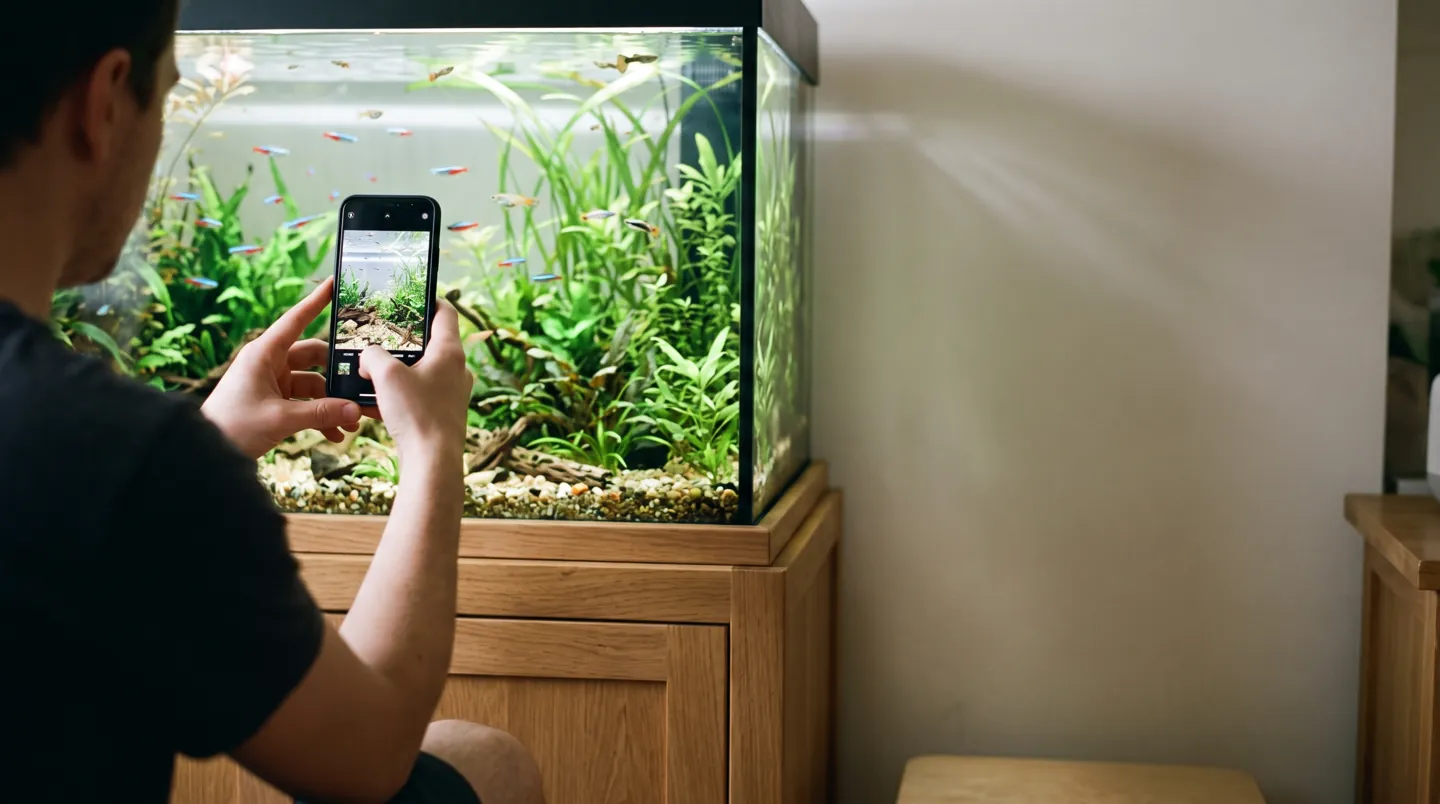
A camera pointed at a fish tank is looking through water, glass and air at once.
Each boundary bends the light a little, so the angle you shoot from matters. Research on flash and fish is more reassuring than many people expect, and a photo taken the same way each week gives you a record to compare against the signs of a healthy fish that veterinarians describe.
AI-generated image, not a photograph of a real person or place.
LOOK don't touch
Shoot straight on
Hands out of the tank
Same photo, every week
Clearer pictures, calmer fish
THE SHORT ANSWER
Clear photos start with angles.
Light bends where water meets glass and air. Flash matters less than hands in the tank.
ANGLE
Point the camera straight at the glass
Light bends toward or away from the straight-on line each time it crosses into a new material. Water has a refractive index of about 1.33 and typical glass about 1.52, so angled shots pick up the most bending.
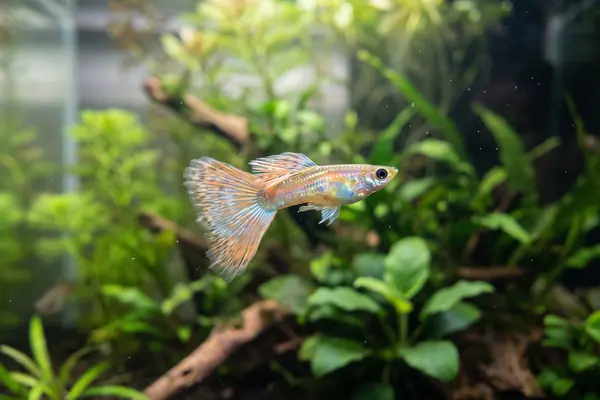
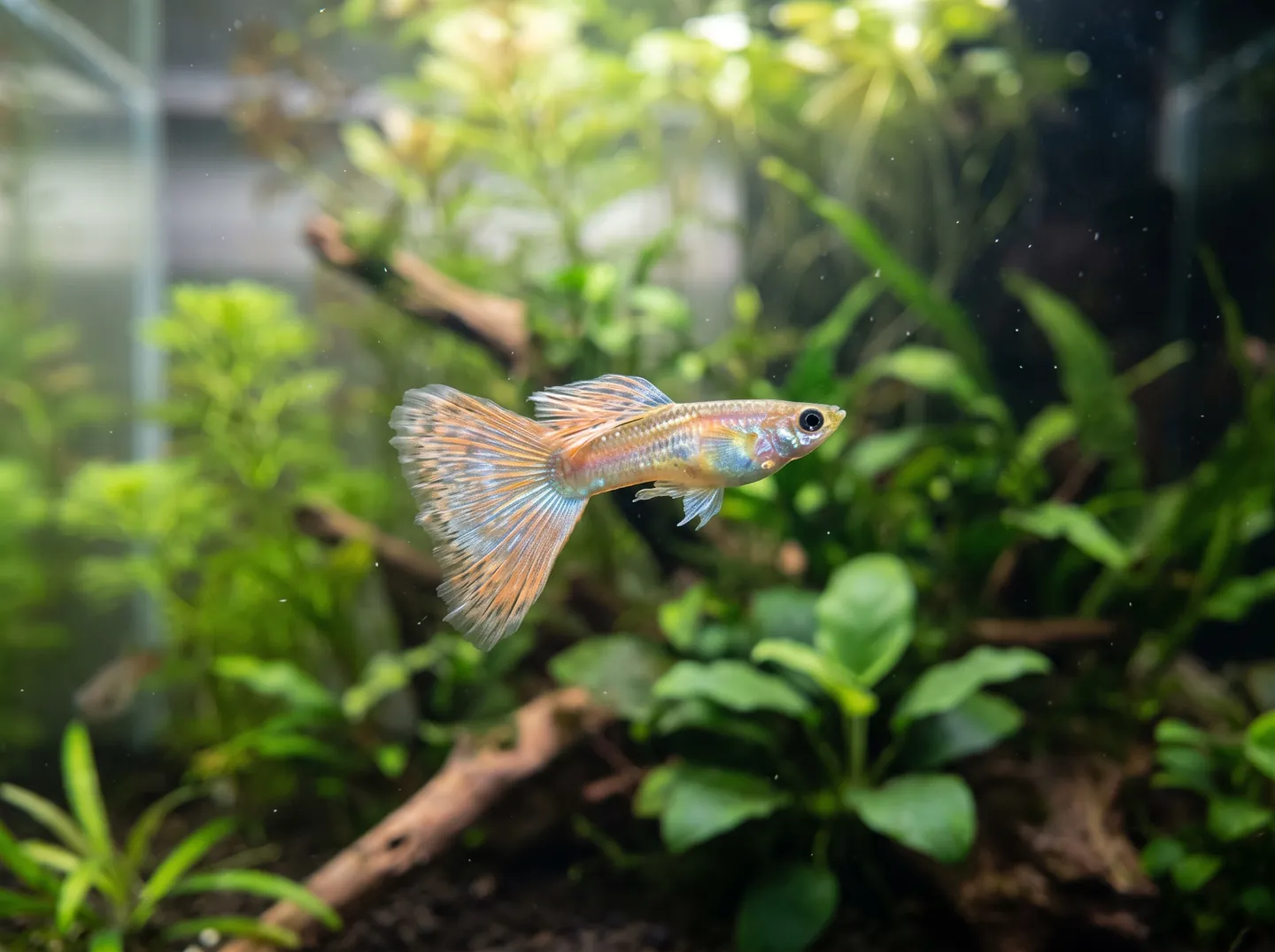
The Merck Veterinary Manual describes healthy fish as having bright eyes, not cloudy, and smooth, intact scales, fins and skin. A regular photo makes slow changes easier to compare.
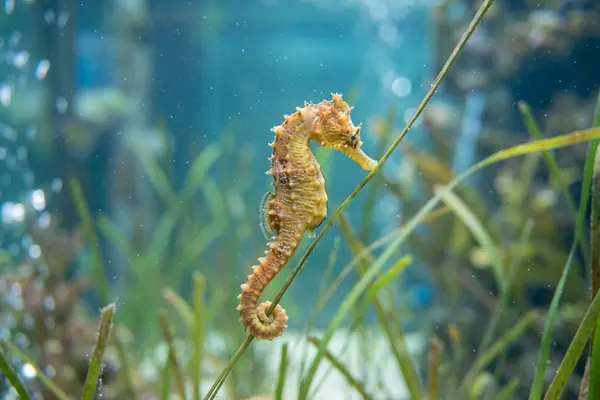
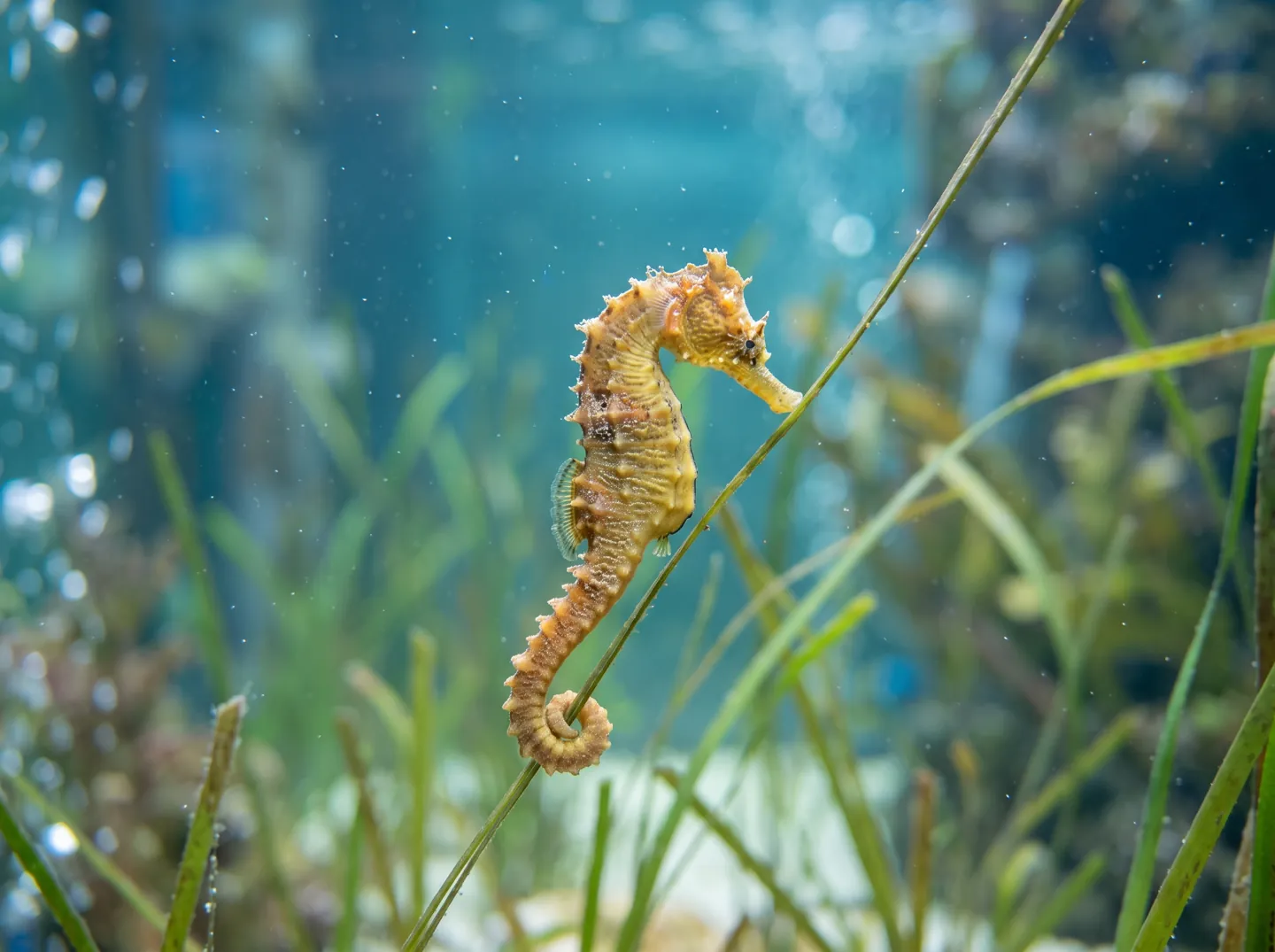
In a Curtin University study, seahorses exposed to more than 4,600 flashes showed no damage to their eyes. Touching the animals, by contrast, caused strong stress responses.
Pick something you can see in a photo of your fish. The bar shows whether veterinary guides list it as a sign of a healthy fish or a sign that a fish may be sick.
Based on pet fish guidance from the Merck Veterinary Manual and the American Veterinary Medical Association. A photo is a reminder to look closely, not a diagnosis. This is general information, not veterinary advice.
TWO NUMBERS WORTH KNOWING
Flash, light and a surface mirror.
One figure from a flash study on seahorses, one from the physics of water and air.
4,600+
Flashes with no eye damage found
In laboratory tests on 36 West Australian seahorses, even the strongest flash treatment did not change feeding success, and examined eyes showed no damage. The strobes were stronger than normal camera or phone flashes.
FLASH STUDY · DE BRAUWER ET AL. 2019
48.6°
Critical angle from water into air
Light leaving water can only escape into air within about 48.6 degrees of straight on. Beyond that it reflects back, which is why steep shots through the glass can show a silvery surface instead of the fish.
OPTICS · HYPERPHYSICS (GEORGIA STATE UNIVERSITY)
The seahorse study tested a worst case: underwater strobes at full power. In the highest treatment, four flashes a minute for ten minutes, seahorses rested less and sometimes looked startled.
FOUR HABITS TO TRY
Better photos, calmer fish.
None of this needs special equipment. A phone, a clean front glass and a little patience go a long way.
Shoot square-on to the front glass
Light that crosses a boundary straight on is not bent sideways. The steeper your angle, the more the water and glass bend the picture.
Photograph while the lights are on
Keep to the tank's normal day. Merck says fish need a day/night cycle and that leaving lights on around the clock stresses them, so do not extend the light just for photos.
Keep your hands out of the water
In the flash study, touching fish caused strong reactions, while flash had no more effect than a person simply watching. Never move a fish for a better shot.
Take the same photo each week
Compare eyes, fins, scales and belly with last week. If something has changed, test the water first, then contact your veterinarian, as the AVMA advises for any unusual signs.
AI-generated image, not a photograph of a real person or place.
WHY THE GLASS PLAYS TRICKS
Water, glass and a mirror.
AI-generated image, not a photograph of a real person or place.
Refraction is the bending of light as it enters a material where it travels at a different speed. Going from water (index about 1.33) into air, light bends away from the straight-on line, and the amount depends on the angle. That is why a fish seen at a slant can look shifted or stretched.
Past a certain angle, light cannot leave the water at all. For water and air that critical angle is about 48.6 degrees; beyond it, all the light reflects back into the water. It explains why the water surface, seen from below through the front glass, can look like a silvery mirror.
Questions
Questions people ask
Does camera flash hurt aquarium fish?
A study of seahorses exposed to more than 4,600 strong underwater strobe flashes found no damage to their eyes and no change in feeding success. The strongest treatment did make them rest less, so there is no need to flash repeatedly.
Why do my fish photos look distorted?
Light bends when it passes between water, glass and air, and the bending grows with the angle. Shooting straight on through the front glass keeps it to a minimum.
Why does the water surface look like a mirror from below?
Light traveling from water to air can only escape within about 48.6 degrees of straight on. At steeper angles it is totally reflected back, so the underside of the surface can act like a mirror.
Can I leave the tank lights on in the evening for photos?
Better not. The Merck Veterinary Manual says fish need a day/night cycle and that lights left on 24 hours a day stress them. Take photos during the tank's normal lit period instead.
What should I look for in a weekly fish photo?
Healthy signs include bright eyes that are not cloudy, fins spread and intact, and smooth scales. Warning signs include white spots, scales standing up, bulging eyes, bloating and gasping at the surface.